
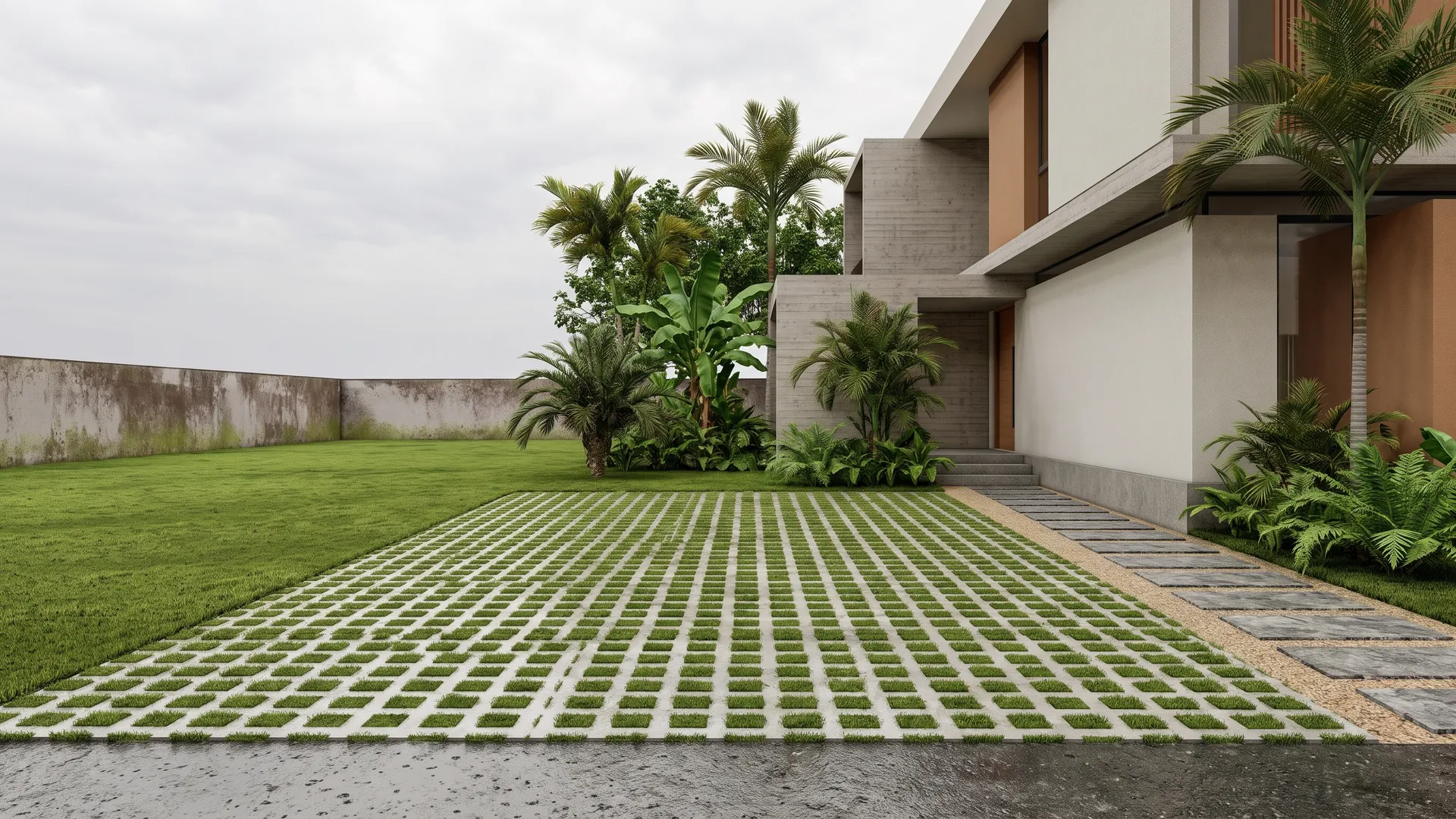
What are grass pavers?
Grass pavers combine the durability of a paver with a living grass surface. Each unit has a grid-like structure: grass grows through the openings, and the grid carries the load. The result is a permeable surface that looks like lawn but stays stable under weight.
What are the environmental benefits of grass pavers?
Grass pavers let water through and keep the surface green, which solid paving blocks and paving stones cannot do.
| Benefit | How grass pavers deliver it |
|---|---|
| Water management | Rainwater percolates into the ground, which reduces runoff and helps prevent flooding |
| Heat reduction | The surface stays cooler than traditional paving, creating a cooler microclimate |
| Biodiversity | The grass provides habitat for insects and small wildlife, supporting local ecosystems |
| Carbon footprint | Sustainable materials and production reduce environmental impact |
Where are grass pavers used?
- Driveways and parking areas: permeable surfaces that carry vehicle weight and stay green.
- Garden paths and walkways: natural-looking paths that blend with the landscape.
- Patios and outdoor living spaces.
- Retaining walls and slopes: they stabilize the soil and add greenery.
- Commercial landscaping.
For hard-paved driveways and car parks, see our guide to interlock pavers or paving blocks.
How are grass pavers installed?
- Prepare the site. Grade the ground and prepare the soil so the area drains well.
- Choose the grass. Pick a variety that thrives in Sri Lanka's climate and withstands foot traffic.
How do you maintain grass pavers?
- Mow the grass to the appropriate height.
- Remove debris to keep the surface tidy.
- Adjust the care to Sri Lanka's monsoon and dry seasons.
What should you plant around grass pavers?
Grass pavers work best as part of a planted landscape. Four ideas:
- Native plants. Sri Lankan native plants are adapted to local conditions and support biodiversity.
- Layered planting. Combine ground covers, shrubs and trees of different heights.
- Water features. A small pond or fountain attracts wildlife.
- Outdoor seating. Place seating areas where they are surrounded by planting.
Frequently asked questions
Can you drive on grass pavers?
Yes. Grass pavers give a stable, load-bearing surface, so they are used for driveways and parking areas as well as paths.
Do grass pavers help with flooding?
They help. Rainwater percolates through the openings into the ground instead of running off the surface, which reduces runoff and helps prevent flooding.
What grass should you use in grass pavers?
Choose a grass variety that thrives in Sri Lanka's climate and withstands foot traffic.
How do you maintain grass pavers?
Mow the grass to the appropriate height, remove debris, and adjust the care to Sri Lanka's monsoon and dry seasons.
Grass pavers from Eco Bricks & Tiles
We supply grass pavers across Sri Lanka. Contact us for a product catalog and samples, a design consultation for your project, professional installation, and maintenance guidance and support.
Browse our grass pavers range or request a free consultation.